

WHAT WE DO
OUR WORK
ABOUT US
GET IN TOUCH →
AI
AI beyond the slop

4 mins

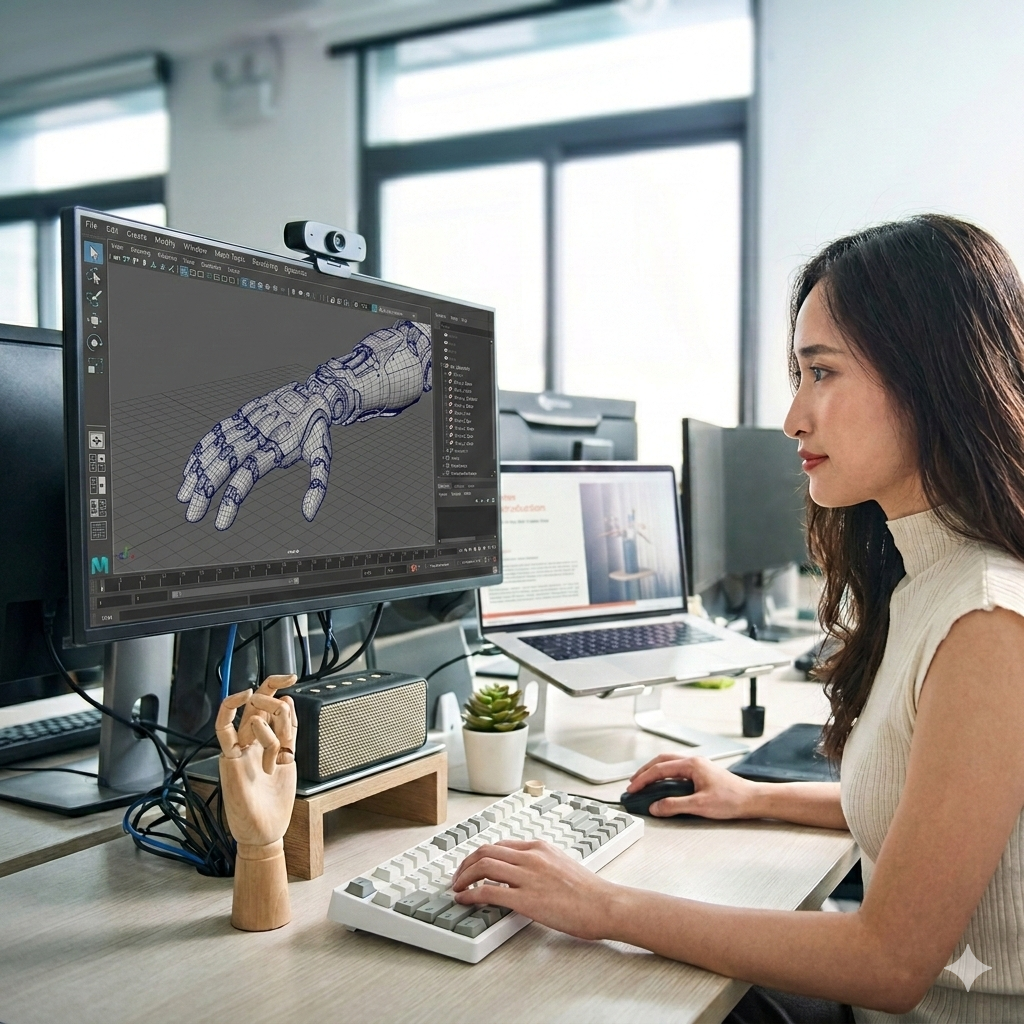
Quality, credibility and the discipline behind intelligent use
AI-generated content is everywhere. Scroll any feed and you’ll see it: strange movements, inconsistency, surreal physics or visuals that feel almost right but not quite; uncanny, as we say in the CGI world. It’s fun, it’s experimental, and it’s part of learning. But when this aesthetic starts showing up in serious brand communication, it becomes a challenge — and this is something we encounter often in our work with brands navigating the new AI landscape.
Quality CGI has never been about pushing buttons. It’s about craft, art direction, technical understanding, and experience. The same is true for AI. AI as a tool, not a shortcut. As an amplifier of skill, not a replacement for it. This principle guides our every decision: technology should enhance the work, not define it.
There’s a term in VFX: Invisible VFX. It describes work that blends so seamlessly you don't notice it — set extensions, sky replacements, digital crowds. They serve the story. They are not the story. The last thing you want someone to say about your content is: “This looks like VFX.” AI should follow the same principle. If people say, “This looks like AI,” something has already gone wrong.
Borrowing from another familiar term, Computer Aided Design (CAD), w‑aided design — we get a useful model for how AI should function in production: AI-aided ‑aided design.
Creating something with AI is “dare I say” easy. That accessibility is exciting, and experimentation is healthy. We’ve all explored these tools, with varying levels of success and failure. But for brand content, the bar is different. Brand content carry's identity, trust, and long-term positioning. It’s not disposable, or at least it shouldn’t‑term positioning. It’s not disposable, or at least it shouldn’t be.
When brand visuals feel generic, inconsistent or uncanny, audiences notice. Even subconsciously, it affects credibility. The risks are real:
- Inconsistency: styles/shapes shifting shot to shot.
- IP and data concerns: unclear training sources, unclear usage rights.
- Message dilution: visuals that distract from the story rather than support it.
- Quality issues: subtle distortions or AI-specific‑specific artefacts that erode trust.
AI still struggles with precision, continuity, and product accuracy. In product visualisation, a 2% deviation can be unacceptable. A label slightly wrong, a material slightly off, proportions subtly distorted; these can undermine the whole piece. Saving money on production but losing brand trust is a bad trade.
Quality still requires human quality control. AI can generate options, but it cannot judge what’s right for a brand. That still requires expertise. However, there are clear opportunities to use AI in production. The real value of AI appears when it is embedded into structured production processes, not used as a standalone trick. In practice, at this time, we see three clear opportunity areas:
- Adhoc‑hoc problem solving
AI can address one off challenges that could be costly or slow in a traditional pipeline, ‑off challenges that would be costly or slow in a traditional pipeline such as style transfer, environment swaps, and image ‑to 3D as a starting point for complex models. These cases don’t always justify a full AI-powered ‑powered workflow, but when applied with intent, they become powerful tools.
- Production acceleration & automation
This is where AI becomes part of the pipeline: upscaling, retopology, background generation, relighting, and more. The key (and the work we focus heavily on) is breaking complex workflows into small, repeatable, reliable steps that can be augmented by AI, whilst keeping human oversight. Prototypes are easy. Scalable systems that brands can trust are the real challenge.
- New value creation
Not every studio needs to become a tech company, but solving recurring production challenges can open new service areas when packaged as deployable solutions: product visualisation systems, AI-assisted versioning pipelines, scalable asset generation, voice systems, etc.
AI will absolutely shape the future of production. But amid the hype, the fundamental truth endures: the “what”, the idea, the story, the connection — matters far more than the how. It’s not about who generates the most content to feed algorithms on TikTok or YouTube. In a world of abundance, less is more. Quality over quantity. Simplicity, functionality, craftsmanship, and human-centered excellence, that is what we are striving for.
- The philosophy that drives our studio
We fuse cutting-edge technology with taste, structure and deep production expertise‑edge technology with taste, structure and deep production expertise to deliver work that is intentional and trustworthy. Work where the technology disappears and the brand shines through.
If you’re exploring how to use AI confidently in production without sacrificing quality, we’d be happy to help.

Leonard Monichi
Global 3D & Motion Director
Leonard Monichi is the Global Head of 3D & Motion at Spring CC, where he leads a talented team of more than 50 artists across CGI, animation, and motion work.






WHAT WE DO
OUR WORK
ABOUT US
ABOUT US
GET IN TOUCH →
AI
AI beyond the slop
4 mins
Quality, credibility and the discipline behind intelligent use
AI-generated content is everywhere. Scroll any feed and you’ll see it: strange movements, inconsistency, surreal physics or visuals that feel almost right but not quite; uncanny, as we say in the CGI world. It’s fun, it’s experimental, and it’s part of learning. But when this aesthetic starts showing up in serious brand communication, it becomes a challenge — and this is something we encounter often in our work with brands navigating the new AI landscape.
Quality CGI has never been about pushing buttons. It’s about craft, art direction, technical understanding, and experience. The same is true for AI. AI as a tool, not a shortcut. As an amplifier of skill, not a replacement for it. This principle guides our every decision: technology should enhance the work, not define it.
There’s a term in VFX: Invisible VFX. It describes work that blends so seamlessly you don't notice it — set extensions, sky replacements, digital crowds. They serve the story. They are not the story. The last thing you want someone to say about your content is: “This looks like VFX.” AI should follow the same principle. If people say, “This looks like AI,” something has already gone wrong.
Borrowing from another familiar term, Computer Aided Design (CAD), w‑aided design — we get a useful model for how AI should function in production: AI-aided ‑aided design.
Creating something with AI is “dare I say” easy. That accessibility is exciting, and experimentation is healthy. We’ve all explored these tools, with varying levels of success and failure. But for brand content, the bar is different. Brand content carry's identity, trust, and long-term positioning. It’s not disposable, or at least it shouldn’t‑term positioning. It’s not disposable, or at least it shouldn’t be.
When brand visuals feel generic, inconsistent or uncanny, audiences notice. Even subconsciously, it affects credibility. The risks are real:
- Inconsistency: styles/shapes shifting shot to shot.
- IP and data concerns: unclear training sources, unclear usage rights.
- Message dilution: visuals that distract from the story rather than support it.
- Quality issues: subtle distortions or AI-specific‑specific artefacts that erode trust.
AI still struggles with precision, continuity, and product accuracy. In product visualisation, a 2% deviation can be unacceptable. A label slightly wrong, a material slightly off, proportions subtly distorted; these can undermine the whole piece. Saving money on production but losing brand trust is a bad trade.
Quality still requires human quality control. AI can generate options, but it cannot judge what’s right for a brand. That still requires expertise. However, there are clear opportunities to use AI in production. The real value of AI appears when it is embedded into structured production processes, not used as a standalone trick. In practice, at this time, we see three clear opportunity areas:
- Adhoc‑hoc problem solving
AI can address one off challenges that could be costly or slow in a traditional pipeline, ‑off challenges that would be costly or slow in a traditional pipeline such as style transfer, environment swaps, and image ‑to 3D as a starting point for complex models. These cases don’t always justify a full AI-powered ‑powered workflow, but when applied with intent, they become powerful tools.
- Production acceleration & automation
This is where AI becomes part of the pipeline: upscaling, retopology, background generation, relighting, and more. The key (and the work we focus heavily on) is breaking complex workflows into small, repeatable, reliable steps that can be augmented by AI, whilst keeping human oversight. Prototypes are easy. Scalable systems that brands can trust are the real challenge.
- New value creation
Not every studio needs to become a tech company, but solving recurring production challenges can open new service areas when packaged as deployable solutions: product visualisation systems, AI-assisted versioning pipelines, scalable asset generation, voice systems, etc.
AI will absolutely shape the future of production. But amid the hype, the fundamental truth endures: the “what”, the idea, the story, the connection — matters far more than the how. It’s not about who generates the most content to feed algorithms on TikTok or YouTube. In a world of abundance, less is more. Quality over quantity. Simplicity, functionality, craftsmanship, and human-centered excellence, that is what we are striving for.
- The philosophy that drives our studio
We fuse cutting-edge technology with taste, structure and deep production expertise‑edge technology with taste, structure and deep production expertise to deliver work that is intentional and trustworthy. Work where the technology disappears and the brand shines through.
If you’re exploring how to use AI confidently in production without sacrificing quality, we’d be happy to help.
Leonard Monichi
Global 3D & Motion Director
Leonard Monichi is the Global Head of 3D & Motion at Spring CC, where he leads a talented team of more than 50 artists across CGI, animation, and motion work.


WHAT WE DO
OUR WORK
ABOUT US
ABOUT US
GET IN TOUCH →
AI
AI beyond the slop
4 mins
Quality, credibility and the discipline behind intelligent use
AI-generated content is everywhere. Scroll any feed and you’ll see it: strange movements, inconsistency, surreal physics or visuals that feel almost right but not quite; uncanny, as we say in the CGI world. It’s fun, it’s experimental, and it’s part of learning. But when this aesthetic starts showing up in serious brand communication, it becomes a challenge — and this is something we encounter often in our work with brands navigating the new AI landscape.
Quality CGI has never been about pushing buttons. It’s about craft, art direction, technical understanding, and experience. The same is true for AI. AI as a tool, not a shortcut. As an amplifier of skill, not a replacement for it. This principle guides our every decision: technology should enhance the work, not define it.
There’s a term in VFX: Invisible VFX. It describes work that blends so seamlessly you don't notice it — set extensions, sky replacements, digital crowds. They serve the story. They are not the story. The last thing you want someone to say about your content is: “This looks like VFX.” AI should follow the same principle. If people say, “This looks like AI,” something has already gone wrong.
Borrowing from another familiar term, Computer Aided Design (CAD), w‑aided design — we get a useful model for how AI should function in production: AI-aided ‑aided design.
Creating something with AI is “dare I say” easy. That accessibility is exciting, and experimentation is healthy. We’ve all explored these tools, with varying levels of success and failure. But for brand content, the bar is different. Brand content carry's identity, trust, and long-term positioning. It’s not disposable, or at least it shouldn’t‑term positioning. It’s not disposable, or at least it shouldn’t be.
When brand visuals feel generic, inconsistent or uncanny, audiences notice. Even subconsciously, it affects credibility. The risks are real:
- Inconsistency: styles/shapes shifting shot to shot.
- IP and data concerns: unclear training sources, unclear usage rights.
- Message dilution: visuals that distract from the story rather than support it.
- Quality issues: subtle distortions or AI-specific‑specific artefacts that erode trust.
AI still struggles with precision, continuity, and product accuracy. In product visualisation, a 2% deviation can be unacceptable. A label slightly wrong, a material slightly off, proportions subtly distorted; these can undermine the whole piece. Saving money on production but losing brand trust is a bad trade.
Quality still requires human quality control. AI can generate options, but it cannot judge what’s right for a brand. That still requires expertise. However, there are clear opportunities to use AI in production. The real value of AI appears when it is embedded into structured production processes, not used as a standalone trick. In practice, at this time, we see three clear opportunity areas:
- Adhoc‑hoc problem solving
AI can address one off challenges that could be costly or slow in a traditional pipeline, ‑off challenges that would be costly or slow in a traditional pipeline such as style transfer, environment swaps, and image ‑to 3D as a starting point for complex models. These cases don’t always justify a full AI-powered ‑powered workflow, but when applied with intent, they become powerful tools.
- Production acceleration & automation
This is where AI becomes part of the pipeline: upscaling, retopology, background generation, relighting, and more. The key (and the work we focus heavily on) is breaking complex workflows into small, repeatable, reliable steps that can be augmented by AI, whilst keeping human oversight. Prototypes are easy. Scalable systems that brands can trust are the real challenge.
- New value creation
Not every studio needs to become a tech company, but solving recurring production challenges can open new service areas when packaged as deployable solutions: product visualisation systems, AI-assisted versioning pipelines, scalable asset generation, voice systems, etc.
AI will absolutely shape the future of production. But amid the hype, the fundamental truth endures: the “what”, the idea, the story, the connection — matters far more than the how. It’s not about who generates the most content to feed algorithms on TikTok or YouTube. In a world of abundance, less is more. Quality over quantity. Simplicity, functionality, craftsmanship, and human-centered excellence, that is what we are striving for.
- The philosophy that drives our studio
We fuse cutting-edge technology with taste, structure and deep production expertise‑edge technology with taste, structure and deep production expertise to deliver work that is intentional and trustworthy. Work where the technology disappears and the brand shines through.
If you’re exploring how to use AI confidently in production without sacrificing quality, we’d be happy to help.
Leonard Monichi
Global 3D & Motion Director
Leonard Monichi is the Global Head of 3D & Motion at Spring CC, where he leads a talented team of more than 50 artists across CGI, animation, and motion work.


General enquiries
hello@spring-cc.com
Copyright 2025 Spring CC. All Rights Reserved.